
Orascom Investment Holding
Positioning and a new corporate identity for an Egyptian telecoms group turning itself into a diversified investment company.

The Why
What do you call a telecoms company that isn’t one anymore?
For twenty years, Orascom meant telecoms. It started in 1997 as Orascom Telecom Holding, grew into one of the most successful telecoms investors and operators in the region, and in 2011 became Orascom Telecom Media and Technology.
Then the strategy changed. The company was moving away from telecoms alone and becoming an investment holding company, putting its money and management experience into whichever sectors had the most room to grow.
The name hadn’t caught up, and neither had the way the company presented itself. Investors, partners and the markets were still being shown a telecoms business, and that left real confusion about what Orascom did now and where it was heading. For a listed company, that kind of confusion matters.
In 2018 the shareholders approved a new name, Orascom Investment Holding. What it needed next was a way of explaining what that name now meant.



Definition
Defining a company by how it behaves
I started with the senior management team, working through what the company stood for now that no single industry defined it.
A holding company is hard to pin down. There’s nothing to visit and nothing on a shelf, and what it does changes as its investments change. So the positioning couldn’t rest on any one sector. It had to rest on how the company behaves.
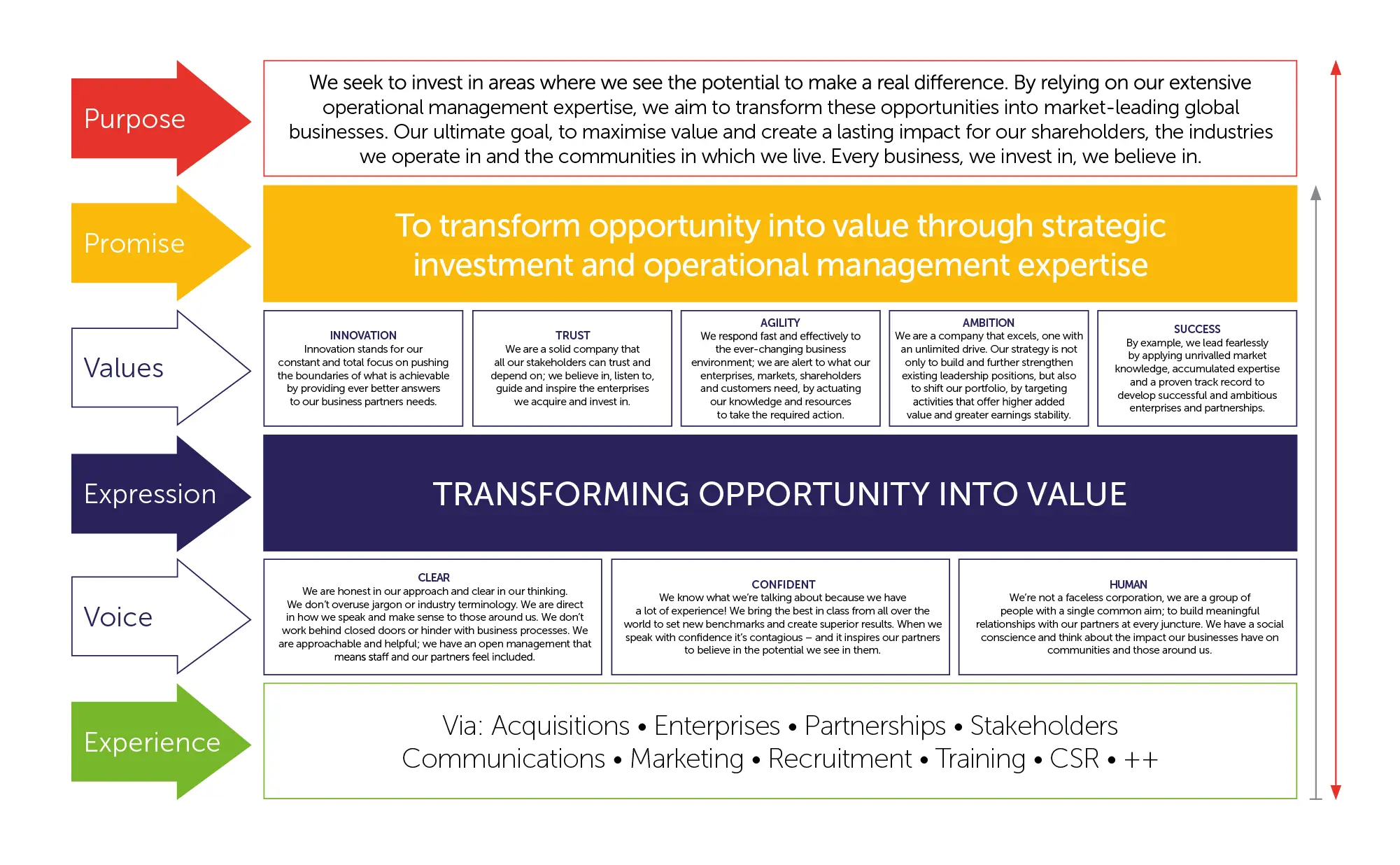
What came out of those conversations was a company that spots opportunity, invests where it can make a real difference, and brings the operational experience to turn that into a business that lasts. I wrote that into a full brand strategy, with a purpose, values, a tone of voice and a promise to sum it all up: Transforming Opportunity into Value. The point was that the company would sound like itself everywhere, from an annual report to a press release to an investor presentation.
Experience
One name, several very different businesses
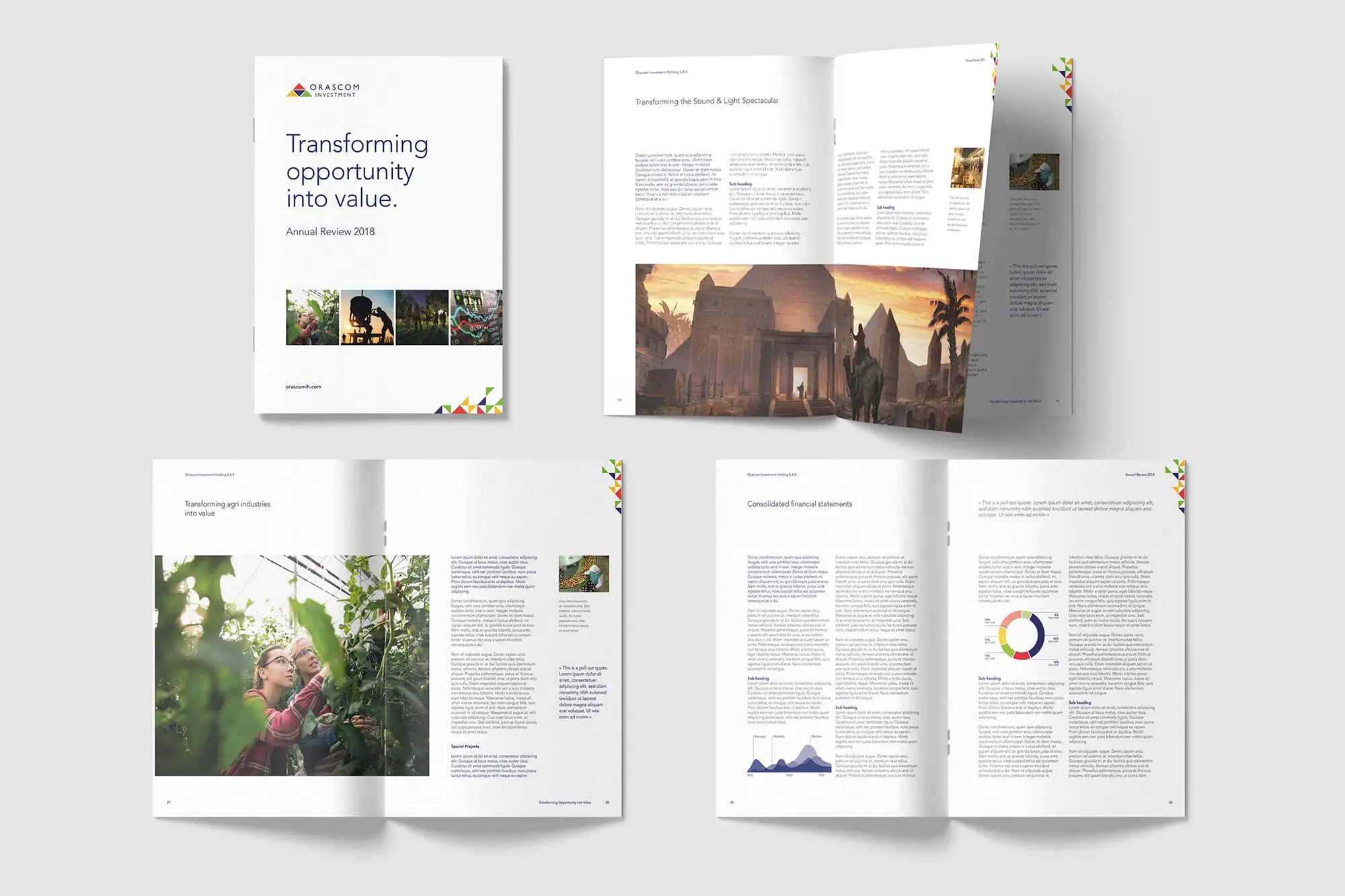
The corporate identity was completely new, from the logo up. The Orascom name carried real weight in the region, so the job was to give it a new look and a new meaning without throwing any of that weight away.
The harder design problem was the businesses underneath it. At launch that meant telecoms, destination development, agri-industry and financial services, four very different sectors with very different audiences. Each needed a mark of its own that still belonged unmistakably to the group, built so a new sector could join without redesigning the whole system.
All of it worked in Arabic and English. The creative direction showed how it should look in advertising and at conferences, and I designed the microsite and produced the final artwork for the stationery and presentation templates the company would use every day.




Implementation
Ready for the markets
A listed company’s identity gets used by a lot of people, from the in-house team and its agencies to investor relations and the subsidiaries themselves. So everything was documented in a full set of corporate guidelines, written so the group would look and sound the same whether it turned up on a stock market ticker or a conference stage.
Looking back, this is where the whole Orascom story starts. It came through someone I’d worked with in Doha. I went to a meeting to introduce myself, and came away with two briefs: this one and INARA, a reimagined sound and light show at the Giza pyramids. They ran side by side, with this one needed first. Everything I’ve done with Orascom since, the Pyramids included, grew out of that meeting.


2018
1997
4
~10
Company history and the 2018 name change are taken from OIH’s own announcements. Sectors are the four the identity launched with; the group’s portfolio has changed since.
“It started as an introduction. It turned into a working relationship with the whole group, and everything that came after.”
Has your business outgrown its name?
Let’s Chat
When what you do changes faster than how you’re seen, the brand has to catch up. If that’s where you are, it’s worth a conversation.