
Background
The About page is the short version. This is the longer one, for anyone who wants to know what thirty odd years actually involved.
Learning the trade, the early nineties
I started out behind a camera rather than a drawing board, as a photographer’s assistant in the studio at Audi Volkswagen’s UK headquarters. It was an infinity cove built for shooting their cars, and rented out to magazines and ad agencies for their own shoots, back when there weren’t many like it. Everything was shot on transparency, long before anyone could check a picture on a screen, so the details counted. If you got something wrong, you found out a day later, when the film came back. I learned a lot about photography and art direction in that studio, and the art direction has followed me ever since.
After that I spent about eighteen months in a county council print room, which nobody put on a CV back then, but it was a great grounding. It’s where I learned what actually happens to artwork once it leaves the designer. From there I went to On Cue Design, a family run studio in Milton Keynes, working for Scania, Newman Tonks and Mölnlycke Health Care. The Mölnlycke work won my first award.
Dubai, and back to the UK
In 1996 I joined Zaman, a start up branding studio in Dubai, and that’s where it all really began. Most of the clients were hotels, Crowne Plaza and the Jumeirah Beach Hotel among them, alongside Etisalat, the national telecoms company, and National Bank of Dubai. Hotels, telecoms and banks have kept turning up in my work ever since. Zaman’s own corporate brochure won an IAA Gold.
It’s also where I started designing in Arabic script. I don’t speak or read Arabic. I did try learning the basics, but it fell a bit flat when everyone just wanted to speak English to me. At least I tried. Working in it every day, though, and asking whenever I wasn’t sure, taught me how to build a logo, set type and lay out a page that works in the language.
I came back to London in 2000, though not for long. Six weeks after I got home I was on a plane straight back out to Dubai, for a two month stint at TMH, and for a while I was the longest staying guest at the brand new Emirates Towers hotel. Back in London again, a relationship from the Zaman years turned into steady freelance work with Landor Associates, alongside a few other studios, before I went back out to TMH for good.
Dubai and Doha, the consultancy years
That was 2001, and this time I stayed for a decade.
TMH is where a lot of my favourite work happened. Identities for Dubailand and Global Village, and Global Village is still using its identity today, unchanged, which in Dubai is saying something. More work for Etisalat too, from their brand guidelines and creative direction to art directing their consumer photography library. And a great deal of hotel work, above all the opening of The Fairmont Dubai, their first hotel in the region. The whole creative team had a hand in it, and my share was the restaurant and bar identities, the menus, the signage and wayfinding inside the hotel, and the adverts, event marketing and collateral before and after the opening. More for the Hilton too, and between the two hotels the menus picked up most of the awards on the About page, with plenty of smaller shoots along the way. Nobody reported to me there, but I spent a fair bit of time helping the more junior designers along.
GSCS came next, and it did well enough that Fitch bought it. I was lead creative on most of the projects, and helped bring on the junior and middleweight designers. The account directors looked after the clients, so apart from the odd presentation, the creative team rarely got in front of them. The projects were more of the same mix, hotels on one side and property on the other. Work on the Jumeirah rebrand and Atlantis The Palm, and a steady run of restaurant and bar brands, which were the studio’s bread and butter. And branding for masterplanned urban communities and individual buildings, for Emaar, Dubai Properties and Union Properties, alongside a few start ups just finding their feet. My work on The World started there too, one of the first mega projects after the Palms, with its islands laid out like a map of the world.
I moved on to Turquoise Branding as creative director of their first Middle East office, newly opened in Dubai. A small studio of four creatives, with the managing director, finance and the account directors alongside us, doing the work locally for the much bigger London office. If I’m honest, it was more them and us between the two offices than one team, though we did plenty of work across both. Mostly on Dubai Properties. A lot of the same clients, because back then everyone in Dubai seemed to work with everyone. I doubt that’s changed much.
After Turquoise I joined Fitch as design director, mostly on Dubai Pearl, leading one of the studio’s three creative teams. Mine was six people across graphic design, digital, motion and wayfinding. One of the other teams led in Arabic, while mine and one other worked in both languages, and we each had our own clients. It was the opposite of Turquoise. Nobody worked in their own corner, and when it mattered all three teams came together as one to get the best result we could. We handled other property projects too, but Dubai Pearl was the big one, and the ultra luxury Baccarat Residences within it is still the project I reference most, second only to the pyramids. The sort of job every designer dreams about, and a real memory maker, with budgets and expectations bigger than anything I’d worked to before. The brand and the launch for potential high net worth off-plan buyers, from the strategy through to the exclusive launch event in Paris itself. Just a hundred guests, flown in from Dubai, Elton John playing for them, and plenty of them signing on the dotted line before the night was over. The crash had other plans for the building itself, but the night did exactly what it was meant to.
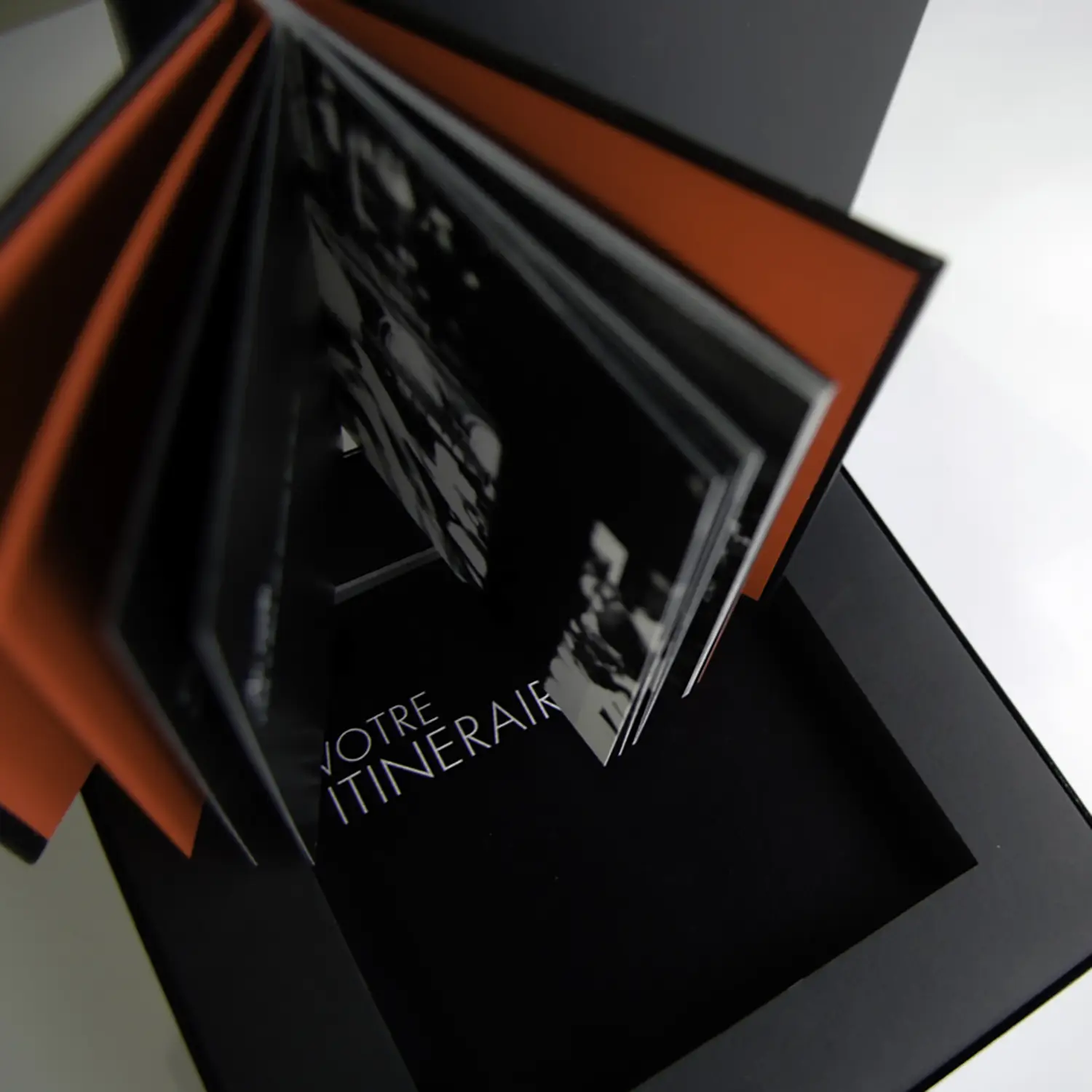
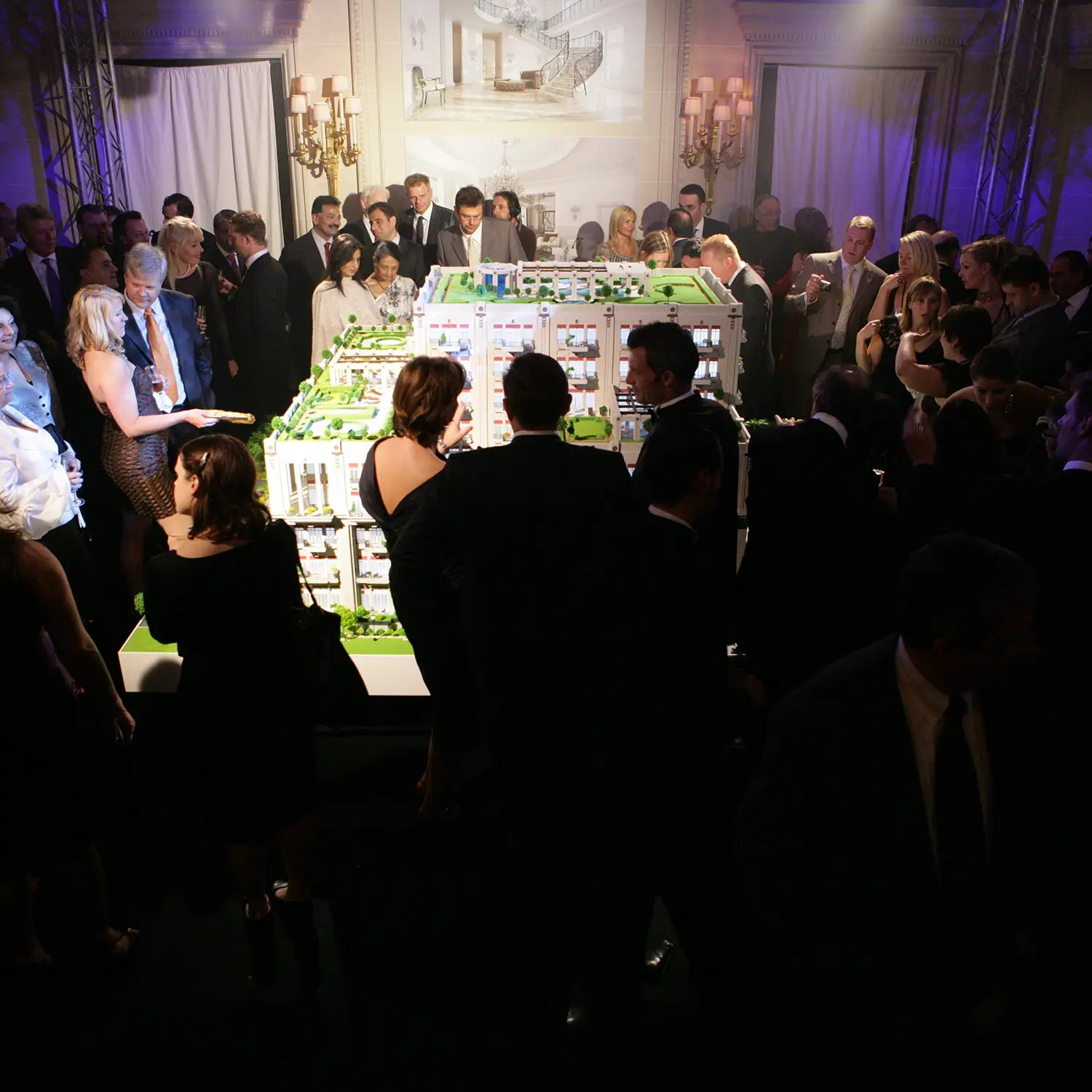

Baccarat Residences, Dubai Pearl. Brand and launch, © Fitch.
Then Siegel+Gale, and I owe them more than a job title. Up to then my work had been graphic design and advertising, leaning more towards branding as the years went on, and briefs mostly arrived already decided. As a designer you were handed the answer and asked to make it look right, without ever seeing the full picture. Siegel+Gale started with the strategy and went deep, too deep at times if you ask me, but it laid the foundations for everything that came next.
Most of my time there, nearly two years of it, was spent seconded into Qtel in Doha. Another national telecoms company, as it happens. On paper I still worked for Siegel+Gale, but Qtel treated us as one of their own. I was creative director in all but name, in a Brand and Communication team of seven. The refreshed brand had been created outside Qatar, and my job was implementing it, internally and externally, in a company where plenty of people hadn’t asked for it. Training a sceptical internal audience, giving creative direction to the internal departments, and pushing the work from their outside agencies up a level. Art directing and reviewing everything that went out, including their consumer photography library, and setting up a review process that more than three hundred people ended up working to.
Two of the team were Qatari graduates, and between us we mentored them to take over our roles once we’d gone. Watching them grow, and properly get what marketing and creative were actually about, is one of the things from that time I’m proudest of.
That changed how I work more than anything before it. For the first time I was on the client side, dealing with creative agencies rather than working in one, which was an eye opener. And I saw what happens to a brand when the people who set the direction aren’t the people who have to make it work, and how many of the problems only show up once it’s out there. Put together, it’s why I do the thinking and the making myself now. It’s also where I first worked with someone who, a few years later, would ring about the pyramids.
For the last stretch I was back in Dubai, in Siegel+Gale’s office there, which was really London’s boots on the ground in the region. I was one of its two design directors, each running a small creative team under an overall creative director, with London’s creatives to call on and, when we needed them, the studios in the States.


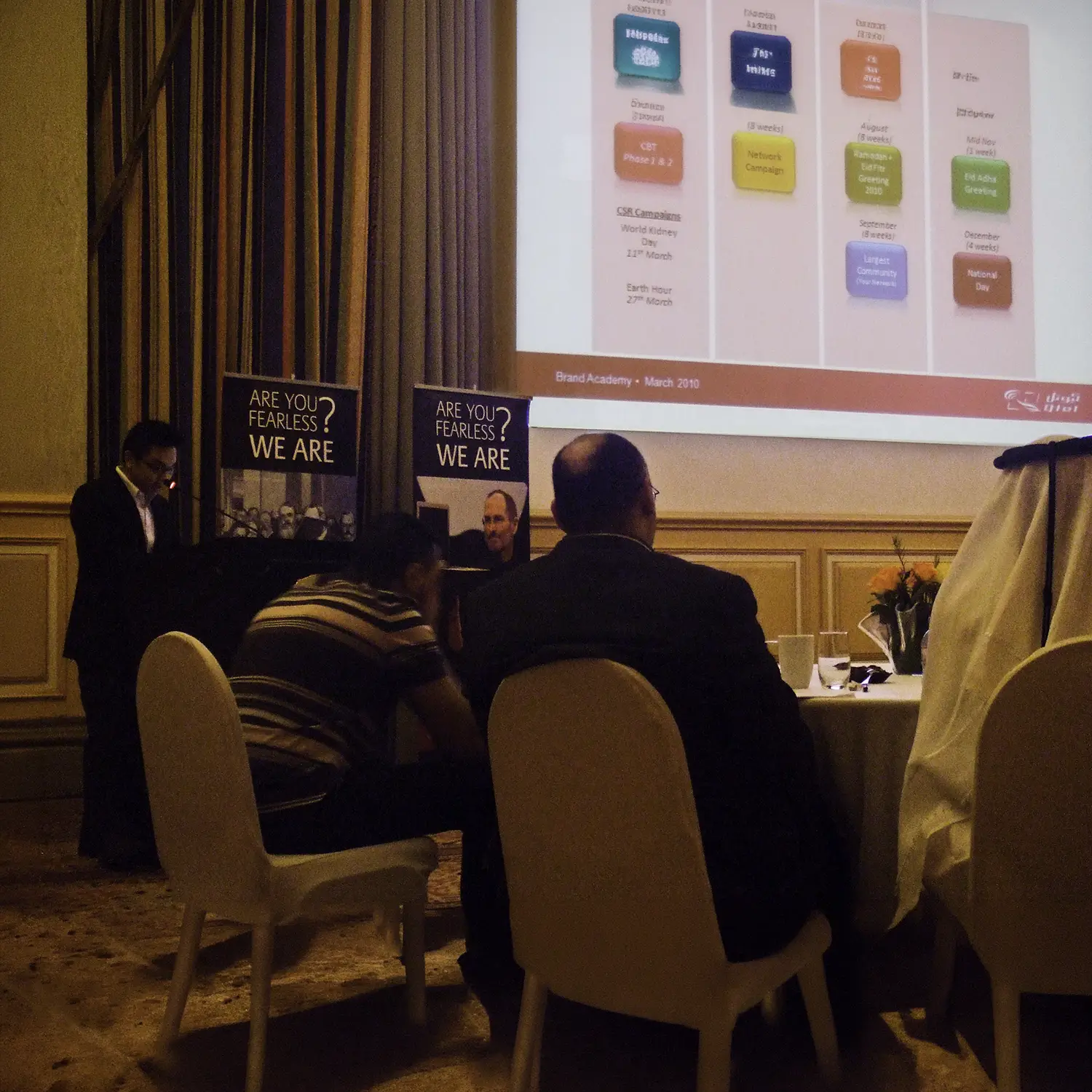
Internal and external brand presentations, © Qtel (now renamed Ooredoo).
On my own, 2011 onwards
Since 2011 it’s been just me, which keeps the team meetings short, even if it does nothing for the stress levels. First around the Gulf and from 2013 back home in Northamptonshire. The early years included Qatar Tourism Authority and Qatar Development Bank, and a brand for Barwa Bank through an agency in Doha, finished but never launched. And, back where I started in a way, a heritage photography exhibition in Berlin for Maersk Oil Qatar. The Work page picks it up from there.
Outside work
Motorsport. Watching it, and for a good few years taking part, including more 24 hour kart races in Dubai than was probably sensible. It explains more of the motorsport work than any business plan would.
And coffee, made properly at home. I’ve done a few barista courses to get it right, so the high street chains don’t see much of me. Which might also explain Caffeine & Machine.
Made it all the way down?
Let’s Chat
Then you already know more about me than most people do before we start. Tell me what you’re working on.